By the time we had finished dinner on January 24th, the ship was on its way out of the sheltered waters back into the Drake Passage – sooner than we expected – so we had not started our motion sickness medicine early enough. Fortunately, the Passage was smoother this time – not Drake lake but definitely smoother.
We spent the next two days sailing northward to a warmer climate. In addition to more wonderful meals, the expedition staff provided us with more education sessions and activities. We have had a wonderful voyage. The Captain and all his guys on the bridge did an excellent job keeping us safe and positioning the ship so we could get all the photos we wanted. The housekeeping staff took exquisite care of us and our state rooms, always being so careful to tidy everything up while we were at meals. The chef and his crew were amazing and spoiled us with any little extras we might like. The expedition crew and zodiac drivers were great at spotting wildlife, birds and beautiful scenery so we could get the best pictures and always answered all our questions. It’s been a trip of a lifetime!! Huge thank you to Polar Latitudes. Can’t recommend them enough.
In one of our educational sessions the presenter displayed a life-sized replica of a snowy albatross.
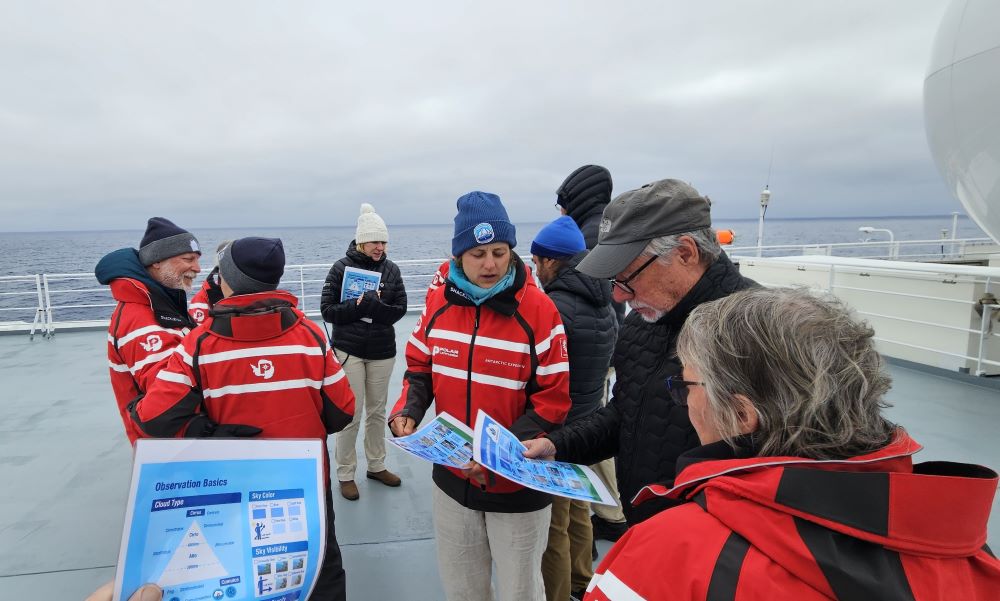
One of the citizen science activities was observing and reporting clouds at the same time a weather satellite was overhead.
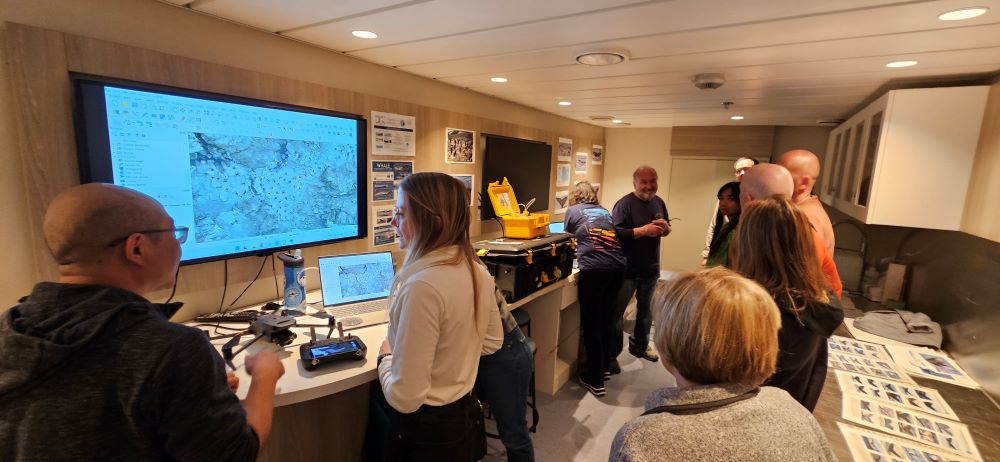
This is the science lab on board. The penguin counters and whale observers used it.
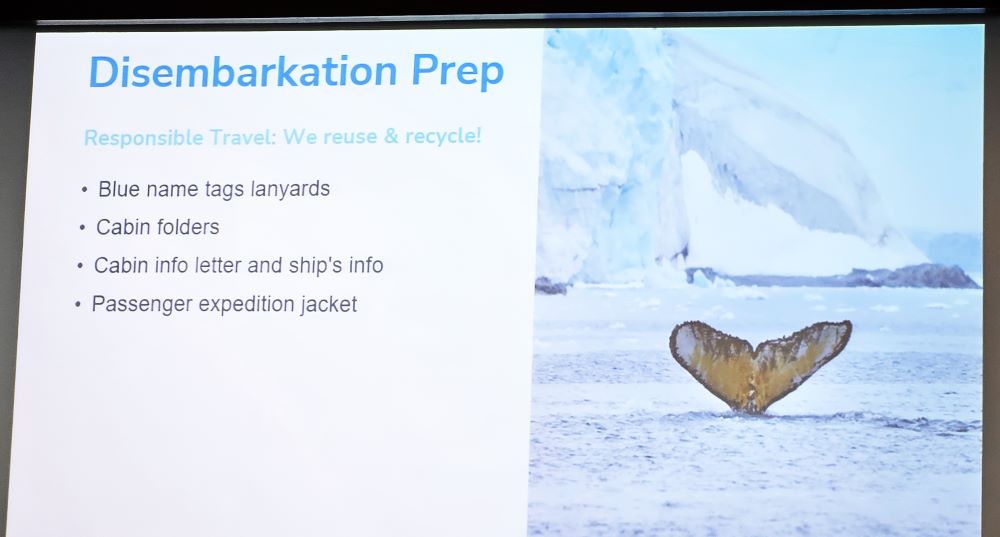
The staff wanted to make sure we were well prepared to leave the ship – on time, because the next group of passengers started loading about 8 hours after we left.
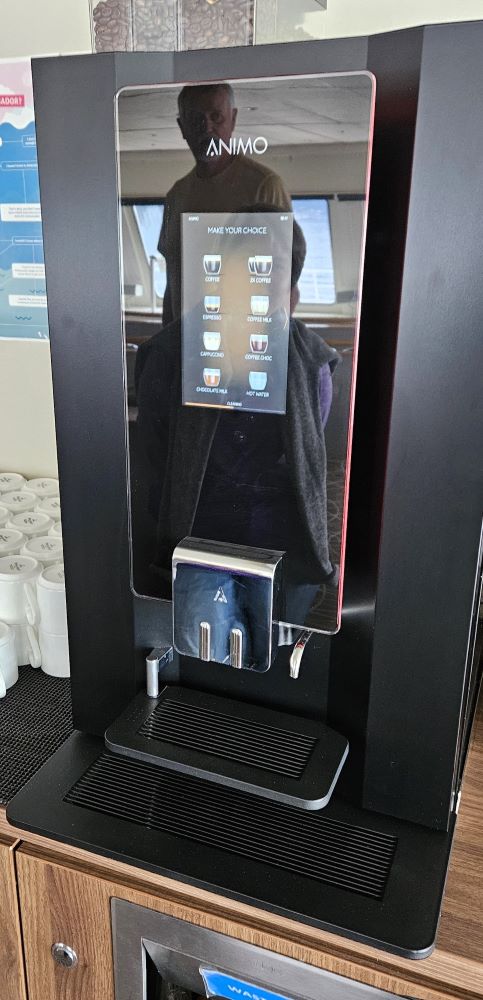
This coffee/hot chocolate that we used frequently would not fit in our luggage.
The ship had many pictures from cruises in other parts of the world. This was one of our favorites.
We arrived back in Ushuaia around 5pm on the 26th. After one more night on board we disembarked the ship the next morning around 8am. Since our flight to Buenos Aires was not until that evening Polar Latitudes arranged to store our luggage downtown, so we were free to walk around town one last time. We bought a few more souvenirs, had lunch in Ushuaia and then called our Uber for a trip to the airport. The trip is not quite over yet because we have one more day to explore Buenos Aires.
Smooth sailing back in the Beagle Channel
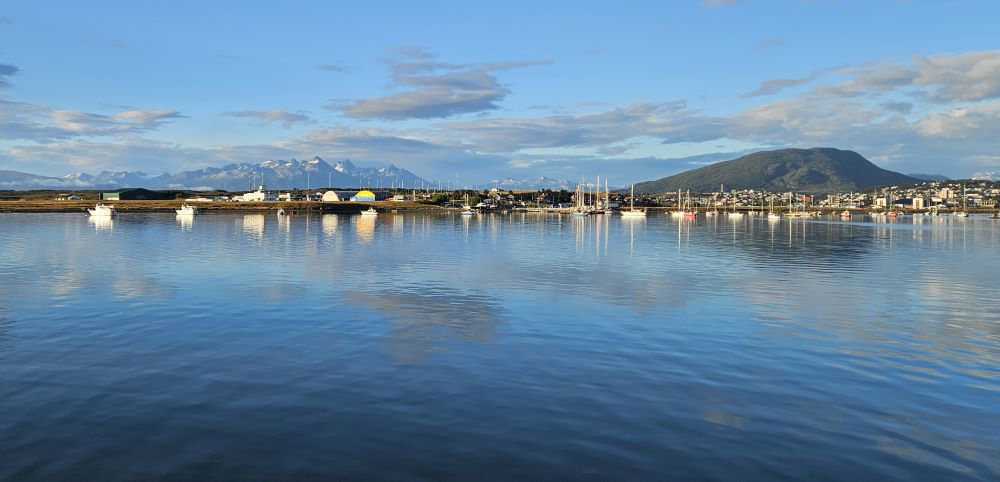
Entering Ushuaia Harbor
The GPS track of our voyage
Lobster thermidor for our last dinner on board
Dessert for our last dinner – key lime pie
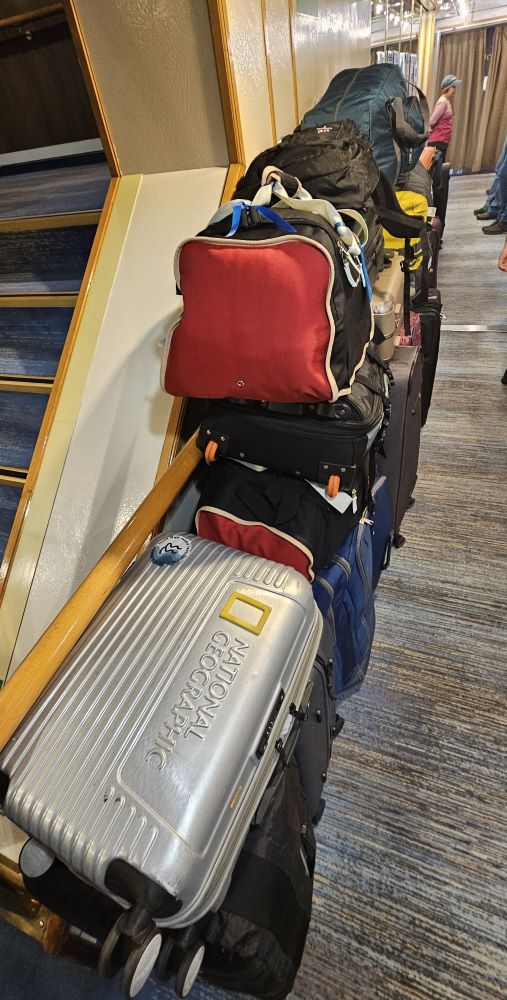
We had to have our luggage tagged and ready first thing in the morning.
As you remember from the last post, we left Ushuaia at 6:15 pm on January 18th headed out into the Beagle Channel traveling east for about 60 miles toward the Drake passage. We had another briefing and were prepared for the weather to deteriorate as we neared the Drake. The Drake was forecast to be swells below 5 meters and winds below 30 knots. We had another wonderful dinner, made sure we all continued to take our meclizine to prevent sea sickness and went to sleep.
So, what’s the big deal about the Drake. The Drake Passage, usually a two day journey, is considered one of the roughest and some would say, THE ROUGHEST waterway on Earth. This reputation comes primarily because of the powerful currents created by the collision of cold Antarctic waters with warmer northern waters, combined with strong, unimpeded winds from the Southern Ocean that encounter no landmass to disrupt their flow, resulting in large waves and turbulent seas. More than 800 ships are believed to have sunk in the Drake Passage. This has resulted in the deaths of over 20,000 sailors. The crossing of the Drake is a whole adventure of its own.
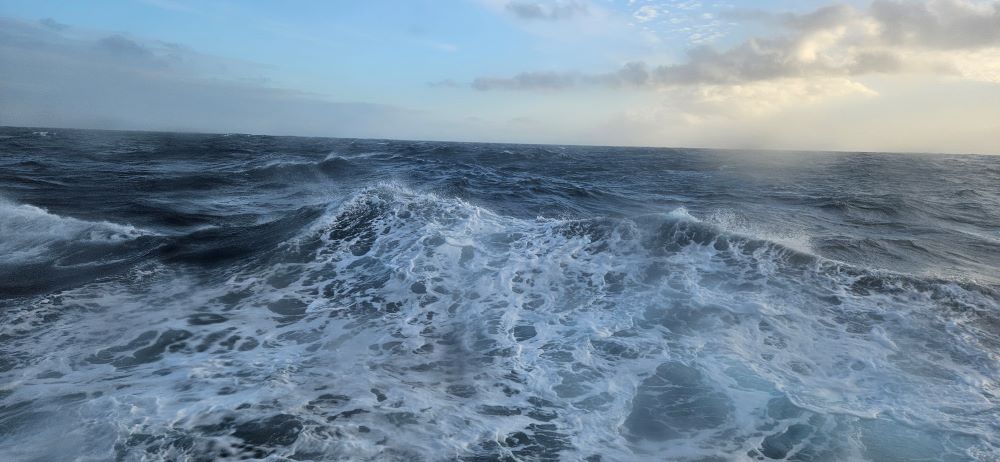
All expedition cruise ships must cross the Drake to reach the 7th Continent and modern expedition cruise ships are well equipped to tackle the crossing . Almost all have underwater stabilizers to reduce the rocking and rolling on heavy seas and have the latest technology to follow the weather. Depending on the weather, you might encounter the “Drake Lake” (very smooth) or the “Drake Shake” (what we encountered.) Our ship was equipped with stabilizers, but we still felt the waves – a lot. We did go to sleep as usual after making sure everything in our state room was secured. This was not much different from securing things for a travel day in the RV. We were both awakened shortly before midnight feeling the ship being tossed around but we didn’t fall out of bed and went back to sleep. By morning there really was no improvement. We were having 20 foot waves at times. We were holding to railings as we went to breakfast. At breakfast we were holding onto our plates so our food wouldn’t end up on the floor. At afternoon tea and treats there was a big crash when a stack of dishes hit the floor. Over the next 24 hours there were those who fell out of bed and out of chairs when we would have a larger wave. We finally completed our crossing on the 20th and thankfully the meclizine worked and we were not sick. At 7:10pm we first spotted land. Not yet Antarctica, but the South Shetland Islands and they were a beautiful site! We survived the Drake and it’s fury, no worse for the experience.
As we left the protection of the Beagle Channel “the weather started getting rough and our (not-so-tiny) ship was tossed.” Sorry, I couldn’t resist.
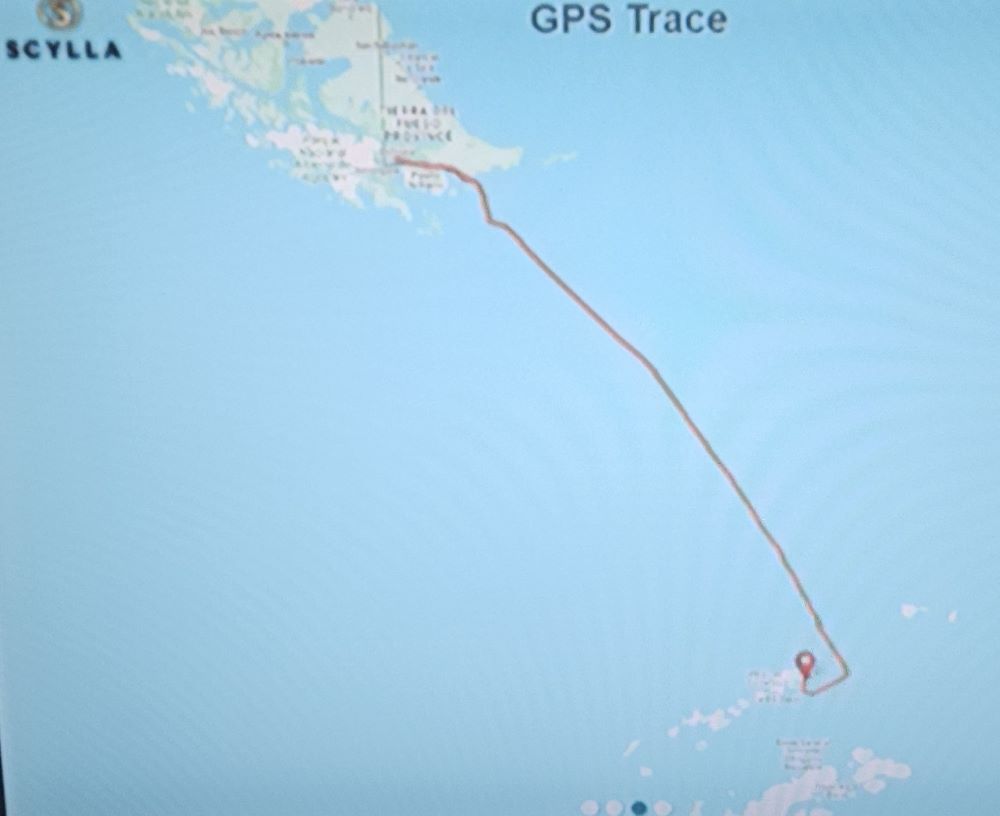
Our GPS Track across Drake Passage shows where the captain changed course from due south to southeast to put the large waves on our starboard aft (hitting the ship at a 45 degree angle instead of broadside.) This reduced the the waves effect on the ship, but it was still rough.
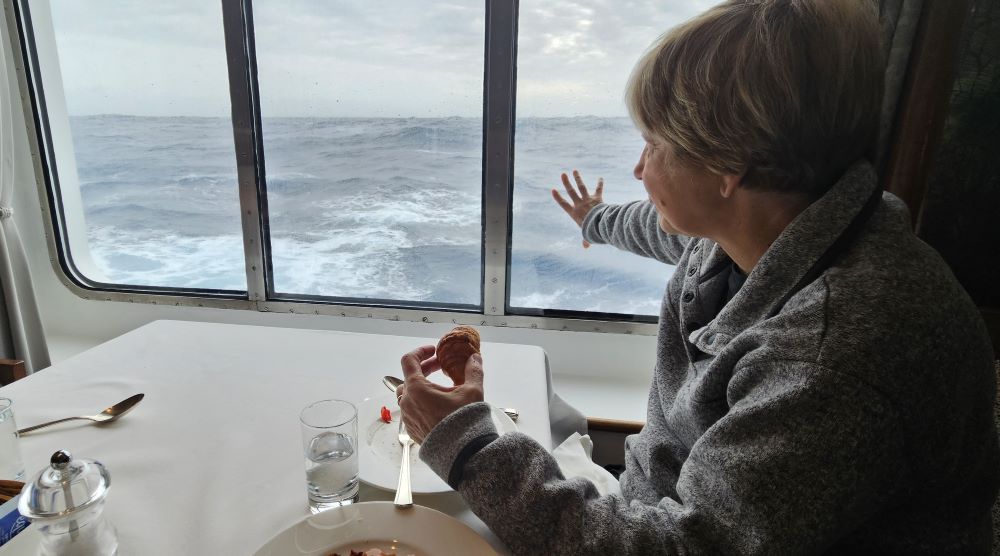
Eating on the Drake Passage was challenging – but we managed.
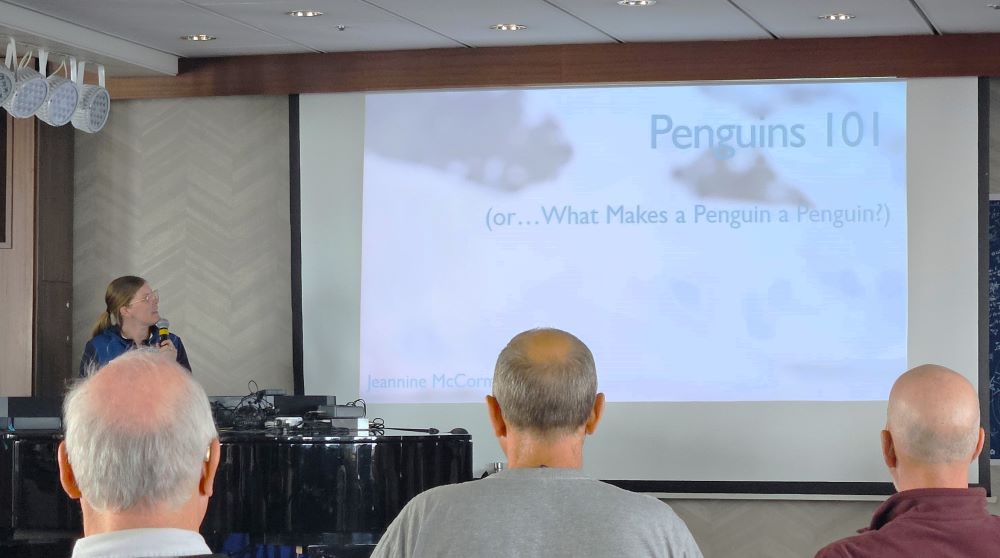
To keep us busy during the crossing, the staff held educational presentations like Penguins 101 …
… and HappyWhale.com.
Part of the Citizen Science program on the ship was counting birds and reporting the count. It was still a little rough the first time we tried it.
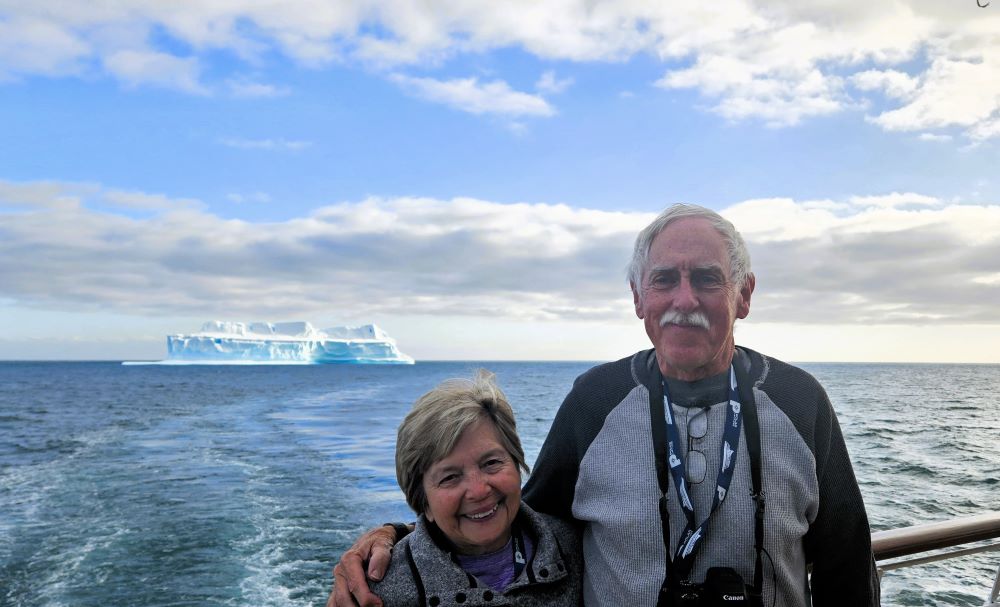
As we approached land (and calmer waters) the outside walkways and decks were opened in time for us to see the first iceberg of the trip.









 RVing With a Purpose